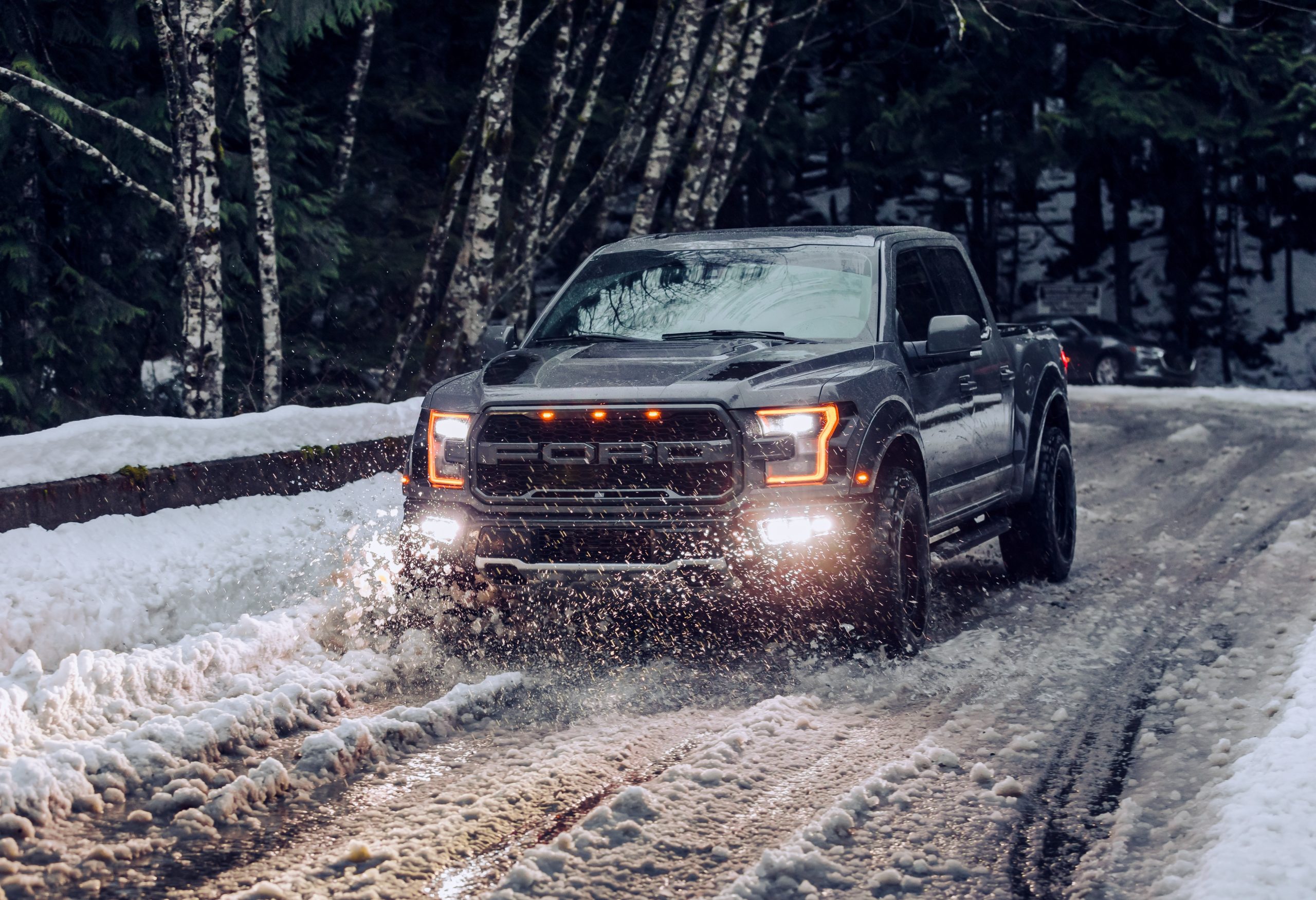

Airbags are commonly installed on work trucks to level heavy loads. On the surface, they solve rear sag quickly and effectively. But in many commercial applications, a new issue appears shortly after installation: increased side-to-side sway.
Fleet managers and dealers often hear the same feedback from drivers:
“The truck feels less stable in corners.”
“It leans more than it used to.”
“It feels loose when loaded.”
This isn’t a flaw in the truck. It’s a change in how the suspension is interacting under load.
Understanding why sway increases with airbags is the first step to solving it correctly.
Most ¾-ton and 1-ton pickups are equipped with auxiliary top overload leaf springs from the factory. These overload springs are designed to engage under heavier payloads, increasing roll resistance and stabilizing the rear axle.
When airbags are added and inflated to level the vehicle, they often lift the frame enough that the factory overload springs no longer make contact with their pads.
The result:
In effect, the airbags are carrying the load vertically—but the truck loses the lateral stability provided by the factory overload system.
This is especially noticeable on:
The truck may sit level, but it doesn’t feel planted.
Overload leaf springs serve a critical function in work truck suspension systems. They increase resistance as weight increases and help control body roll during turning or uneven terrain.
When properly engaged, overload springs:
When they are disengaged due to airbag lift, that roll control is reduced. The truck may feel softer laterally, even if ride height looks correct.
This is where a targeted solution becomes necessary.
SuperSprings International developed SuperSway Stops specifically to solve the problem of overload spring disengagement.
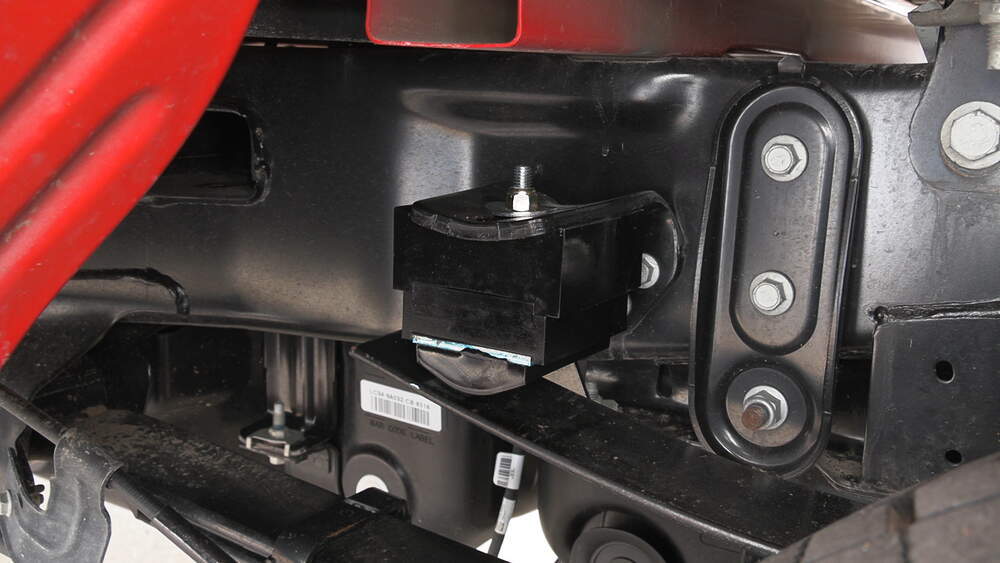
SuperSway Stops are not bump stops. They are contact pads designed to replace or enhance the factory overload contact point on trucks equipped with auxiliary top overload springs.
Their purpose is straightforward:
Re-engage the overload springs sooner and maintain consistent contact—even when airbags are installed.
By adjusting the contact point between the overload leaf and the frame, SuperSway Stops allow the factory overload springs to remain active under load.
The airbags continue to provide vertical support. The overload springs resume providing lateral stability.
Once the overload springs are properly engaged again, drivers typically notice:
Importantly, this solution works with the existing suspension design rather than replacing it.
Airbags level the truck. Overload springs control sway. SuperSway Stops ensure both systems function together instead of working against each other.
SuperSway Stops are particularly effective for:
In many commercial fleets, airbags are installed first to address sag. Sway complaints surface later. SuperSway Stops provide a mechanical correction without removing the existing air system.
For dealers and installers, this offers a straightforward add-on solution that enhances stability without introducing new maintenance requirements.
Air systems require pressure management. Overload springs do not. Once engaged properly, overload springs operate mechanically, responding instantly to load shifts during turns or uneven road conditions.
Re-engaging them restores the factory-designed roll resistance characteristics of the truck.
From a fleet management perspective, restoring mechanical roll control reduces driver fatigue and improves handling predictability. That matters when vehicles operate daily under load.
Reducing sway isn’t just about comfort. It’s about control.
One of the advantages of SuperSway Stops is simplicity. There are:
They modify contact geometry so the factory overload springs can do what they were designed to do.
For commercial operators, solutions that restore OEM functionality without adding service requirements typically provide the strongest long-term value.
Airbags solve sag. Overload springs control sway. When airbags disengage overload springs, the suspension system becomes imbalanced.
SuperSway Stops correct that imbalance by ensuring overload springs remain engaged while airbags handle vertical load leveling.
For fleets, work truck dealers, and installers encountering sway complaints after airbag installations, addressing overload engagement directly is often the most effective and durable fix.
When vertical support and lateral stability work together, the truck feels level—and stable.


 English English
 Spanish
 French
 German
 Italian English English Spanish
French
German
Italian

Tragen Sie sich in unsere E-Mail-Liste ein, um die neuesten Nachrichten, Tipps, Blogbeiträge und Angebote zu erhalten!